
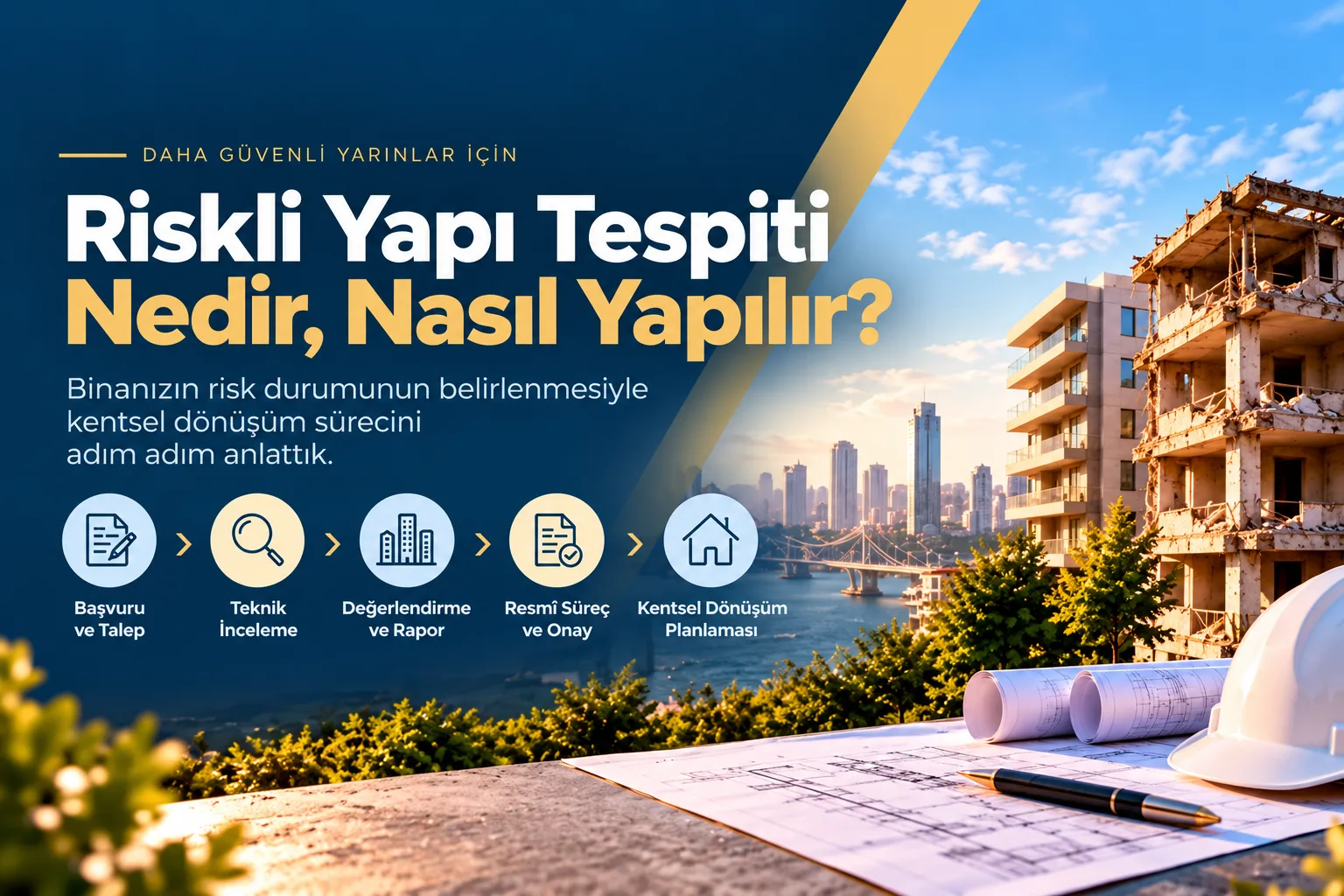
High-Risk Building Assessment: What It Is and How It Works
How is a high-risk building assessment carried out, who can apply, and what happens if your building is found to be high-risk? What to keep in mind about the process in urban renewal.
What Is an At-Risk Building Assessment in Turkey?
Earthquake safety is a major consideration for people who own older buildings in Turkey. A property that looks sound from the outside is not necessarily safe during an earthquake. Its structural system, condition and technical characteristics need to be examined by qualified specialists.
An official at-risk building assessment is a technical procedure under Turkey's Law No. 6306 and its implementing regulations. The law covers buildings found, on scientific and technical grounds, to have reached the end of their economic life or to be at risk of collapse or severe damage. See the official legislation in the Turkish Official Gazette.
The procedure often forms an important part of urban renewal. Because an official finding may have legal and financial consequences, owners should also consider what happens after the report.
Ayören Urban Renewal Consultancy supports owners in assessing the broader renewal process, including the property and land, potential contractors, proposals and project coordination.
What Does the Official Assessment Mean?
The purpose is to determine whether a building meets the statutory criteria for being classified as at risk, using prescribed technical methods.
The current implementing rules described in the source require assessments to follow the relevant Principles for Identifying At-Risk Buildings, using the electronic system designated by the Urban Renewal Presidency. See the related implementing regulation.
This is not the same as a general building survey or an informal opinion about earthquake resistance. It is a formal statutory procedure.
Who Can Request an Assessment?
Under the rules described, a formal risk assessment is generally requested by the building owners or their legal representatives, at their own expense, through the prescribed electronic process.
In certain circumstances, the Urban Renewal Presidency or another competent authority may carry out the assessment or require it to be done. The details are addressed in the implementing regulation.
When considering an application, it is sensible to think ahead to the possible rebuilding options and the decisions that may follow.
How Is an At-Risk Building Assessed?
The process involves technical investigation and reporting in line with legal requirements, not just a brief visual inspection.
1. Apply to an Authorised Organisation
An official assessment must be performed by an organisation or public body authorised under the legislation.
Owners should distinguish an engineer's general building report from the formal risk assessment prescribed by Law No. 6306.
2. Inspect the Building
Authorised specialists examine the structure and relevant technical features, applying the prescribed Principles for Identifying At-Risk Buildings.
The rules also set training and competency requirements for the engineers involved. Further details are available in the official implementing regulation.
3. Evaluate the Technical Evidence
Information collected during the inspections is used in the required calculations and engineering assessments.
The objective is to assess risk through scientific and technical evidence, rather than drawing conclusions from the age or appearance of the building alone.
4. Prepare and Submit the Risk Assessment Report
After the technical work, the responsible body prepares the official assessment report.
Under the procedures described in the source, the examining public authority or licensed organisation submits it electronically to the relevant provincial directorate, or to another authority where responsibility has been delegated. It is then reviewed for compliance with the procedural and technical requirements. See the 2024 Official Gazette announcement.
What Happens If the Building Is Found to Be At Risk?
A risk finding is not the end of the process. The finding must take effect in accordance with the rules, and owners must consider the steps that follow.
The questions often become broader:
What can legally be built on the existing plot?
What sizes and types of new apartments are feasible?
Will owners need to make additional payments?
Which contractors should be considered?
How should competing offers be compared?
What must the technical specifications and contract contain?
What guarantees are available?
How will the overall project be financed?
Urban renewal consultancy can help owners review these technical, financial and contractual matters together.
Can Owners Object to the Assessment?
The official system provides an objection procedure, with technical committees responsible for considering eligible objections. The regulation includes requirements concerning who may object and the relevant time limits. Late objections or submissions by people without the necessary standing may not be accepted. See the 2024 Official Gazette announcement.
If you receive an official notice, check the current notification and objection deadlines promptly and seek legal advice where necessary.
Is Every Old Building Legally At Risk?
No. Age alone does not establish that a building is at risk under Law No. 6306.
Equally, a building without visible cracks is not automatically earthquake-safe. Statements such as “a 30-year-old building must be unsafe” or “no visible cracks means it is safe” are not technically reliable.
Official classification depends on an assessment of the particular building against the required criteria.
Why Think About Urban Renewal Before the Risk Assessment?
The technical assessment and the planning of a viable new building are two different matters.
For example, an existing property may contain 20 flats, but the number and sizes possible in a replacement development depend on planning rights, shared areas, project design and technical requirements.
Ayören's approach is therefore to consider the whole renewal process wherever possible, rather than focusing only on obtaining a risk report.
Frequently Asked Questions About At-Risk Buildings
Does the age of a building automatically make it legally at risk?
No. The official finding must be based on the prescribed technical assessment carried out by an authorised organisation.
Can owners consider project options before an official risk assessment?
Yes. Owners can review land conditions, planning rules, existing units and possible design options before starting the formal assessment, helping them make better-informed decisions.
Could Your Building Qualify for Urban Renewal?
Share the location and key details of your building so the Ayören Grup team can understand your situation and contact you.